

Somewhere right now, a supply chain analyst is pulling data from an ERP, a TMS, a WMS and three spreadsheets nobody wants to admit still exist. They are reconciling numbers. Formatting slides. Building a deck for a Monday morning review that will arrive too late to change anything.
The meeting will follow a familiar script. Leaders will spend 80 percent of the time understanding what happened last week. Fill rates. On-time delivery. Freight cost overruns. Supplier nonconformances. By the time someone asks “what should we do about it,” the hour is up.
This ritual plays out every week in supply chain organizations around the world. Hundreds of hours spent assembling the rearview mirror. Almost no time left to look through the windshield.
It does not have to work this way.
The real problem is not data. It is thinking time.
Most supply chain leaders are not short on information. They are short on time to think about what the information means. The data exists. The dashboards exist. What is missing is a layer between raw metrics and strategic decisions.
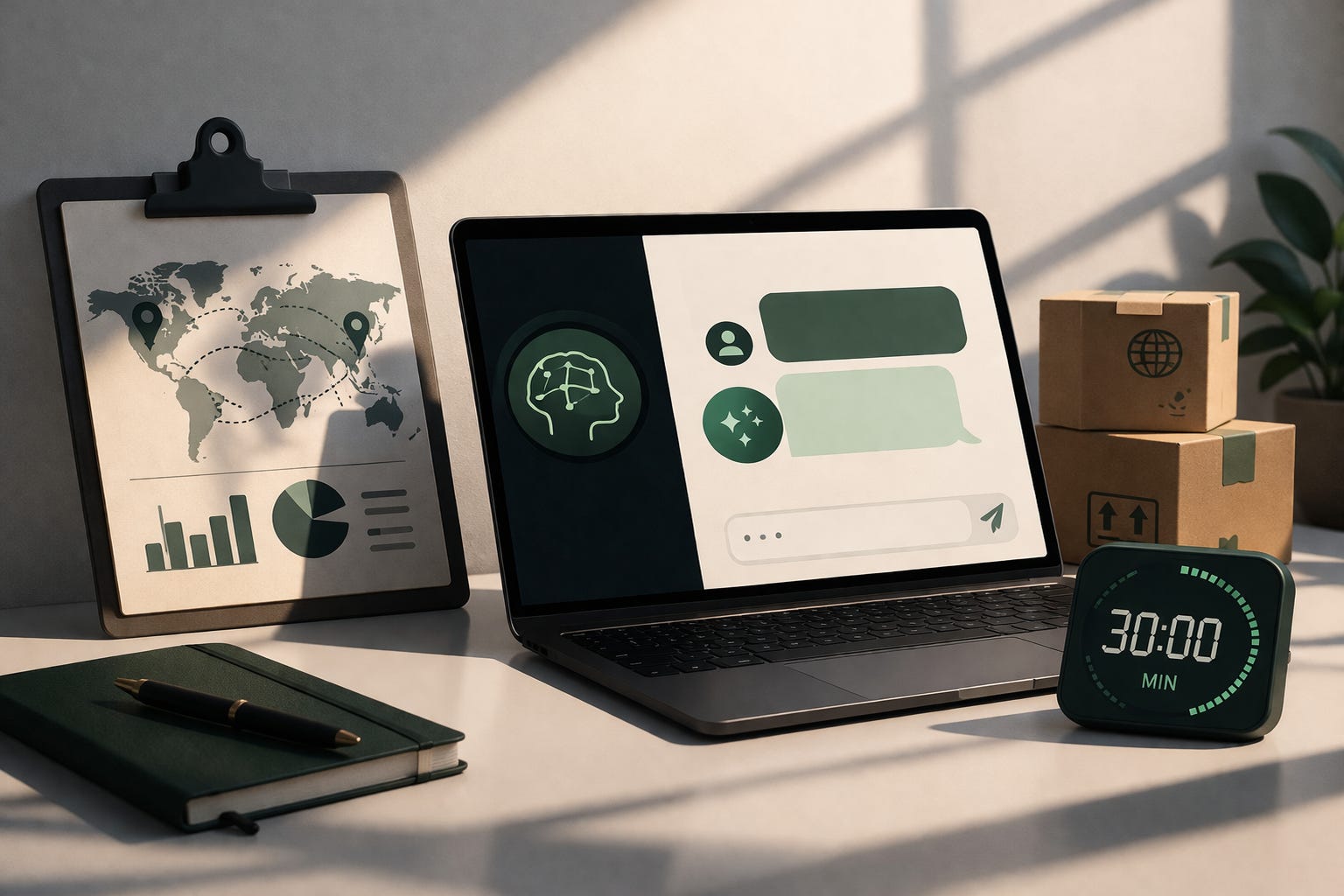
That layer used to require a team of analysts or an expensive consulting engagement. Today it requires a 30-minute conversation with a large language model.
Not a chatbot. Not a glorified search engine. A properly configured AI supply chain strategist that understands your frameworks, knows your context and reasons through problems the way a seasoned Chief Supply Chain Officer would.
What an AI CSCO actually looks like
You do not need a consulting firm. You do not need custom infrastructure. You do not need a six-figure budget or a six-month implementation timeline.
You need three things.
First, a system prompt. This is the personality and expertise layer. Tell the model it is a senior supply chain strategist with deep expertise across procurement, logistics, demand planning and risk management. Give it frameworks. SCOR metrics. Total cost of ownership thinking. PESTLE dimensions for risk assessment. The Kraljic matrix for category strategy. Whatever mental models you use in your own decision-making, encode them explicitly.
Second, context. Upload your freight rate trends. Paste in your supplier performance data. Feed it your inventory aging report or your latest S&OP deck. The model does not need live access to your ERP. It needs the same information you would hand a sharp consultant on day one of an engagement.
Third, good questions.
“Which three suppliers represent the highest concentration risk in my electronics category?” “If transit times on our Asia-to-Europe lanes increase by 12 days, what is the downstream impact on safety stock for our top 20 SKUs?” “Draft a recommendation for our S&OP meeting on whether to dual-source our five highest-risk single-sourced components.” “Review this freight RFQ response and flag anything that looks off compared to current market benchmarks.”
A well-prompted model will not just answer. It will reason through the problem, identify assumptions, flag what it does not know and structure its response the way a good CSCO would brief a board.
Why this matters now
The gap between supply chain organizations that use AI for decision support and those that do not is widening fast. Not because the technology is expensive. Because the barrier has shifted from budget to knowledge.
Enterprise AI platforms cost millions and take months to deploy. A personal AI supply chain advisor costs almost nothing and takes 30 minutes to build. The difference in capability is smaller than most people assume. The difference in speed is enormous.
The professionals who will lead supply chain functions five years from now are not waiting for IT to approve a platform. They are building their own thinking tools today. Testing prompts. Refining frameworks. Learning what works when you feed a model your actual category data versus generic industry benchmarks.
This is not about replacing the supply chain leader. It is about giving that leader a thought partner that never sleeps, never forgets the framework and can process a 50-page supplier assessment in seconds.
Where to start
Build your AI CSCO in stages. Start with one use case. Pick the meeting you dread preparing for. The monthly business review where you spend two days pulling data and building slides nobody reads past page five. The quarterly supplier review where half the analysis arrives after the decisions have already been made.
Upload that data. Write a prompt that describes the analysis you wish someone would do for you. Iterate. Refine. Add more context in the next round.
Within 30 minutes you will have something that would have taken a consulting team two weeks and a substantial invoice to deliver.
Within a month of regular use you will have a customized supply chain intelligence layer that knows your categories, your risks, your metrics and your decision-making style. It will remember that you care about landed cost not unit price. That your CEO always asks about single-source exposure. That your Southeast Asia suppliers tend to underperform on quality in Q3.
The tool is already here. The only question is whether you build your version this week or wait another quarter for someone else to build it for you.
What does your weekly or monthly supply chain review process look like? Have you started using AI to accelerate your analysis or are you still building decks the old way? Share your experience on Chain.NET.
